For decades, astronomers have faced a puzzling discrepancy between what they see through telescopes and what the laws of physics predict. Visible matter stars, gas, and dust accounts for only a tiny fraction of the mass required to explain the behavior of galaxies and galaxy clusters. The missing mass, which does not emit, absorb, or reflect light, is known as dark matter. It is an invisible substance that interacts with gravity but remains elusive to direct observation, making it one of the most significant mysteries in modern astrophysics.
Understanding dark matter is crucial because it serves as the scaffolding for the entire universe. Without its gravitational pull, galaxies would not have formed, and the large-scale structure of the cosmos would look vastly different. Scientists estimate that dark matter constitutes approximately 85 percent of all matter in the universe, while ordinary matter makes up only about 15 percent. This imbalance suggests that our current understanding of fundamental particles is incomplete, driving intense research efforts to identify its nature.
If you need professional digital marketing services to strengthen your online presence, our team can help.
As we delve deeper into the cosmos, the evidence for this unseen entity becomes increasingly compelling. From the rotation curves of spiral galaxies to the bending of light around distant clusters, observations consistently point to the presence of a non-luminous component. This article explores the nature of dark matter, the evidence supporting its existence, the leading candidates for its composition, and the innovative methods scientists use to detect it.
What Is Dark Matter and Why Do We Think It Exists?
The concept of dark matter was first proposed in the 1930s by Swiss astronomer Fritz Zwicky. While studying the Coma Cluster, he noticed that the galaxies within it were moving too fast to be held together by the gravity of their visible mass alone. He suggested that most of the mass in the universe was “dark” and undetectable. However, it was not until the 1970s that the evidence became undeniable, thanks to the work of Vera Rubin and Kent Ford.
For related reading, see How to Choose the Right Mink….
Rubin and Ford observed the rotation curves of spiral galaxies. According to Newtonian mechanics, stars orbiting further from the center of a galaxy should move more slowly, similar to how planets closer to the Sun orbit faster than those further away. However, their observations showed that stars at the edges of galaxies moved at the same speed as those near the center. This flat rotation curve implied that there was much more mass in the outer regions than what could be accounted for by visible stars and gas.
Dark matter is not merely a theoretical construct; it is a necessary component to explain the observed dynamics of the universe. It does not interact with the electromagnetic force, meaning it does not emit or absorb light, which makes it invisible to traditional telescopes. Its primary interaction is through gravity, allowing it to influence the motion of visible matter. This gravitational influence is the key to detecting and studying this elusive substance.
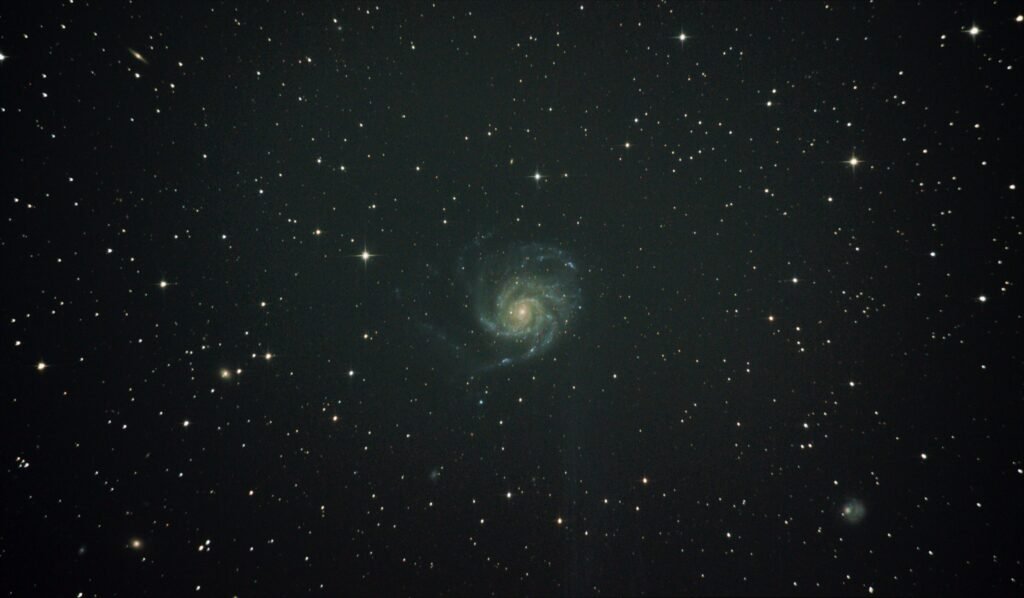
The Evidence: From Galaxy Rotation to Gravitational Lensing
The case for dark matter is built on a variety of independent observational methods, each providing a different perspective on the invisible mass distribution in the universe. These methods collectively form a robust framework that supports the existence of dark matter, even though we have not yet directly detected it.
Galaxy Rotation Curves
As mentioned earlier, the rotation speeds of stars in spiral galaxies provide strong evidence for dark matter. The consistent flatness of these rotation curves across many galaxies indicates that the mass distribution extends far beyond the visible disk. This suggests the presence of a “halo” of dark matter surrounding each galaxy, adding to the total gravitational pull.
Gravitational Lensing
Gravitational lensing is another powerful tool for mapping dark matter. According to Einstein’s theory of general relativity, massive objects bend the path of light. When light from a distant galaxy passes through a cluster of galaxies, the mass of the cluster acts as a lens, distorting the image of the background galaxy. By analyzing these distortions, astronomers can map the distribution of mass, including the invisible dark matter. Observations of gravitational lensing have revealed that galaxy clusters contain far more mass than can be seen, further supporting the dark matter hypothesis.
The Cosmic Microwave Background
The Cosmic Microwave Background (CMB) is the afterglow of the Big Bang. Detailed measurements of the CMB by satellites like WMAP and Planck have provided precise data on the composition of the early universe. The patterns in the CMB reveal the ratios of different types of matter and energy. These measurements strongly indicate that dark matter made up a significant portion of the universe’s matter content shortly after the Big Bang, providing a snapshot of the universe’s early composition.
| Evidence Source | Observation | Implication for Dark Matter |
|---|---|---|
| Galaxy Rotation Curves | Stars at the edges of galaxies move as fast as those near the center | Indicates an extended mass halo surrounding galaxies |
| Gravitational Lensing | Light from distant objects is bent more than expected by visible mass | Reveals additional invisible mass in galaxy clusters |
| Cosmic Microwave Background | Specific fluctuation patterns in the early universe’s radiation | Quantifies the proportion of dark matter in the early cosmos |
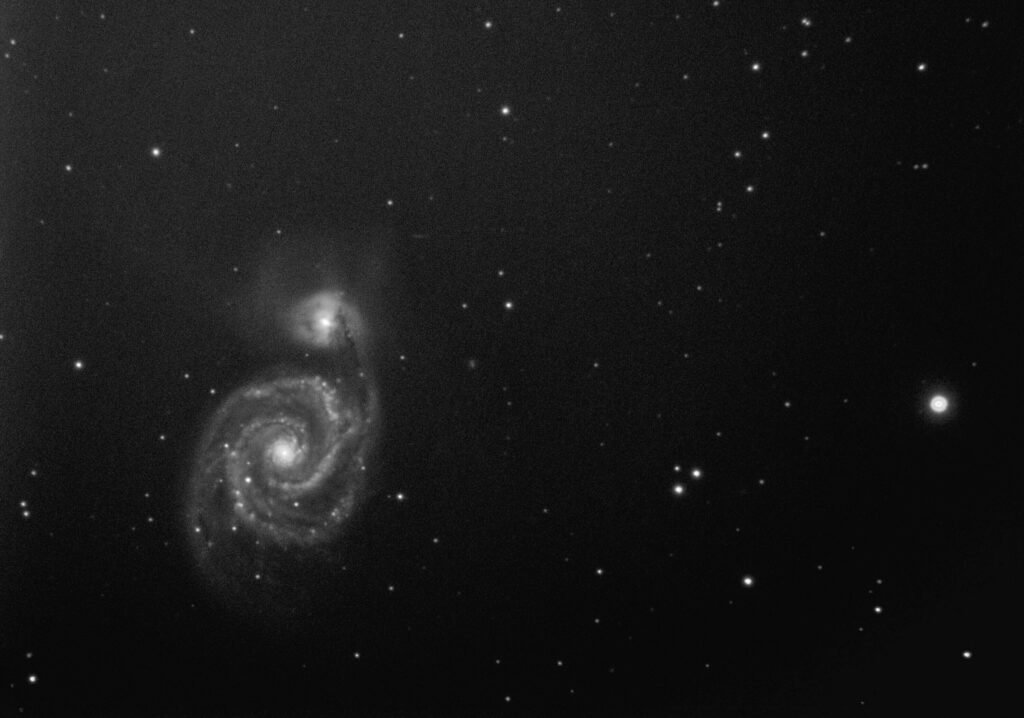
Top Candidates: WIMPs, Axions, and Primordial Black Holes
While the existence of dark matter is well-supported by evidence, its physical nature remains unknown. Scientists have proposed several candidates, each with different properties and implications for fundamental physics. The most popular candidates are Weakly Interacting Massive Particles (WIMPs), axions, and primordial black holes.
For additional reference, Neil Patel offers marketing and growth strategies.
WIMPs: The Leading Contender
WIMPs are hypothetical particles that interact only through gravity and the weak nuclear force. They are a natural byproduct of supersymmetry, a theory that extends the Standard Model of particle physics. For many years, WIMPs were the favorite candidate because their predicted mass and interaction rates fit well with the observed abundance of dark matter. However, extensive searches at particle accelerators and underground detectors have not yet found definitive evidence of WIMPs.
Axions: Light and Elusive
Axions are another class of hypothetical particles that were originally proposed to solve a problem in quantum chromodynamics, the theory of strong interactions. They are much lighter than WIMPs and interact even more weakly with ordinary matter. Detecting axions is extremely challenging, but recent advances in technology have made it possible to search for them using sensitive electromagnetic conversion experiments. Axions remain a promising candidate, especially if WIMP searches continue to yield no results.
Primordial Black Holes
Primordial black holes are hypothetical black holes that formed in the early universe, shortly after the Big Bang. Unlike stellar black holes, which form from the collapse of massive stars, primordial black holes could have formed from density fluctuations in the early cosmos. If they exist in the right mass range, they could account for some or all of the dark matter. However, observations of gravitational waves and microlensing place strict limits on the abundance of primordial black holes, ruling out large portions of the possible mass range.
How Scientists Are Trying to Detect the Undetectable
Given the elusive nature of dark matter, scientists have developed several strategies to detect it. These methods can be broadly categorized into direct detection, indirect detection, and collider experiments. Each approach offers a unique way to probe the properties of dark matter particles.
Direct Detection
Direct detection experiments aim to observe the rare collisions between dark matter particles and ordinary matter. These experiments are typically located deep underground to shield detectors from cosmic rays, which can mimic the signal of a dark matter interaction. Detectors use highly sensitive materials, such as xenon or germanium, to measure tiny energy deposits caused by dark matter particles. Despite years of effort, no confirmed signal has been detected, which has led to tighter constraints on the possible properties of dark matter.
Indirect Detection
Indirect detection looks for the products of dark matter particle annihilation or decay. If dark matter particles can interact with each other, they may produce standard model particles, such as gamma rays, neutrinos, or positrons. Observatories like the Fermi Gamma-ray Space Telescope and the IceCube Neutrino Observatory search for excesses of these particles in regions where dark matter is expected to be dense, such as the center of the galaxy or galaxy clusters. While interesting excesses have been reported, none have been conclusively attributed to dark matter.
Collider Experiments
Particle accelerators, such as the Large Hadron Collider (LHC) at CERN, can potentially produce dark matter particles by colliding protons at high energies. If dark matter is produced, it would escape the detector, leaving a signature of “missing energy” in the collision data. Scientists analyze events with significant missing transverse energy to search for signs of dark matter production. So far, no conclusive evidence has been found, but the LHC continues to explore new parameter spaces.
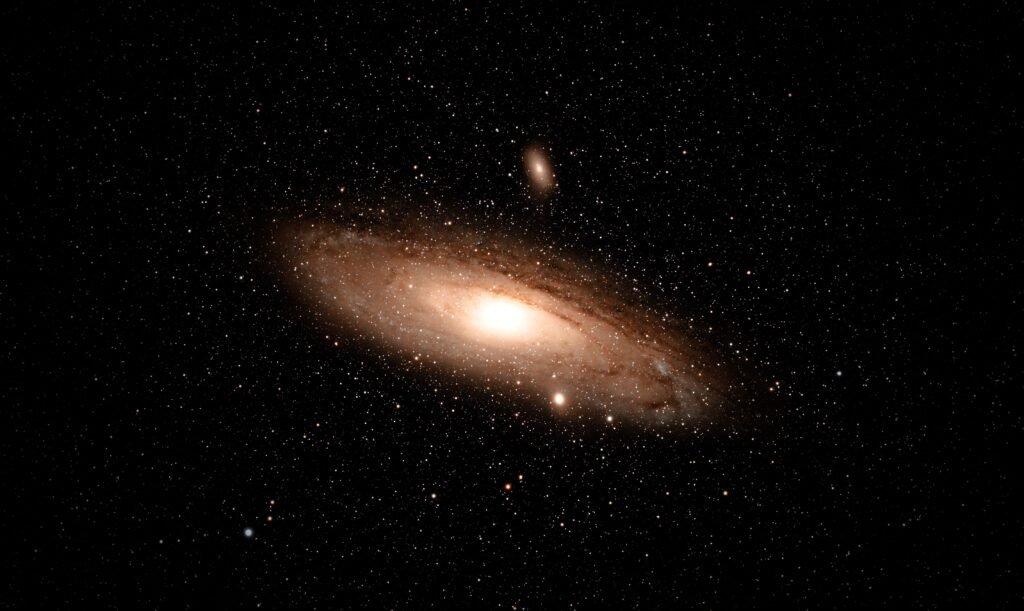
The Bigger Picture: How Dark Matter Shapes Cosmic Evolution
Dark matter is not just a passive ingredient in the universe; it plays an active role in shaping the large-scale structure of the cosmos. Its gravitational influence guides the formation of galaxies, clusters, and the vast cosmic web that connects them. Understanding dark matter is essential for comprehending how the universe evolved from the hot, dense state of the Big Bang to the complex structure we observe today.
In the early universe, small density fluctuations in the dark matter distribution acted as seeds for structure formation. Gravity amplified these fluctuations, causing dark matter to clump together into halos. These halos provided the gravitational wells into which ordinary matter fell, allowing it to cool and form stars and galaxies. Without dark matter, the universe would be much less structured, and galaxies would likely be smaller and less numerous.
The distribution of dark matter also affects the expansion rate of the universe. Together with dark energy, which drives the accelerated expansion of the universe, dark matter determines the fate of the cosmos. The interplay between these two mysterious components is a central topic in modern cosmology. By studying the distribution of dark matter and its effect on the expansion history of the universe, scientists hope to gain insights into the fundamental laws of physics that govern the cosmos.
Furthermore, the study of dark matter has implications for our understanding of particle physics. The existence of dark matter suggests that there are particles beyond those described by the Standard Model. Discovering the nature of dark matter could lead to breakthroughs in fundamental physics, potentially unifying our understanding of the very small and the very large. It may also provide clues about the early universe and the conditions that prevailed shortly after the Big Bang.
Conclusion
Dark matter remains one of the most profound mysteries in science. While its existence is strongly supported by a wealth of observational evidence, its true nature remains elusive. The search for dark matter particles is ongoing, with multiple detection strategies being pursued simultaneously. Each negative result narrows the field of possibilities, bringing us closer to a definitive answer.
As technology advances and new experiments come online, the hope is that we will soon detect a signal that reveals the identity of this invisible substance. Whether it is WIMPs, axions, or something entirely unexpected, the discovery would be a landmark moment in human knowledge. It would deepen our understanding of the universe and our place within it, shedding light on the fundamental forces that shape the cosmos. Until then, dark matter continues to exert its gravitational influence, leaving astronomers and physicists to piece together the puzzle of the invisible universe.

Frequently Asked Questions
What is dark matter and how is it detected?
Dark matter is a form of matter that does not emit, absorb, or reflect light, making it invisible to electromagnetic observations. Its presence is inferred from gravitational effects, such as the rotation speeds of galaxies, gravitational lensing of background objects, and the cosmic microwave background anisotropies.
Why does dark matter matter for galaxy rotation curves?
Observed rotation curves of spiral galaxies remain flat at large radii, whereas visible matter alone would predict a decline. The additional gravitational pull from a halo of dark matter explains these flat curves, indicating that most of a galaxy’s mass is dark.
How does dark matter influence the large‑scale structure of the universe?
Dark matter provides the gravitational scaffolding that drives the formation of cosmic web structures—filaments, clusters, and voids. Its slow, non‑relativistic behavior allows it to clump early, guiding the distribution of ordinary matter that later forms stars and galaxies.
What are the leading candidates for the composition of dark matter?
The most studied candidates are weakly interacting massive particles (WIMPs) and axions, both predicted by extensions of the Standard Model. Sterile neutrinos and primordial black holes are also considered, but no definitive evidence for any candidate has yet been found.
How are scientists currently searching for dark matter particles?
Searches include direct detection experiments that look for nuclear recoils in ultra‑clean detectors, indirect detection that searches for excess gamma rays or neutrinos from dark matter annihilation, and collider production attempts at the Large Hadron Collider. Each method probes different mass ranges and interaction strengths.

Mike is a Travel Guide Expert passionate about helping travelers explore the world. He shares destination guides, travel tips, itineraries, and practical advice to make trip planning easier, helping readers discover new places and create memorable travel experiences.